
Particles are solid airborne substances whose diameters can differ greatly. The size of a particle affects how it enters the body and what kinds of health impacts it can cause.
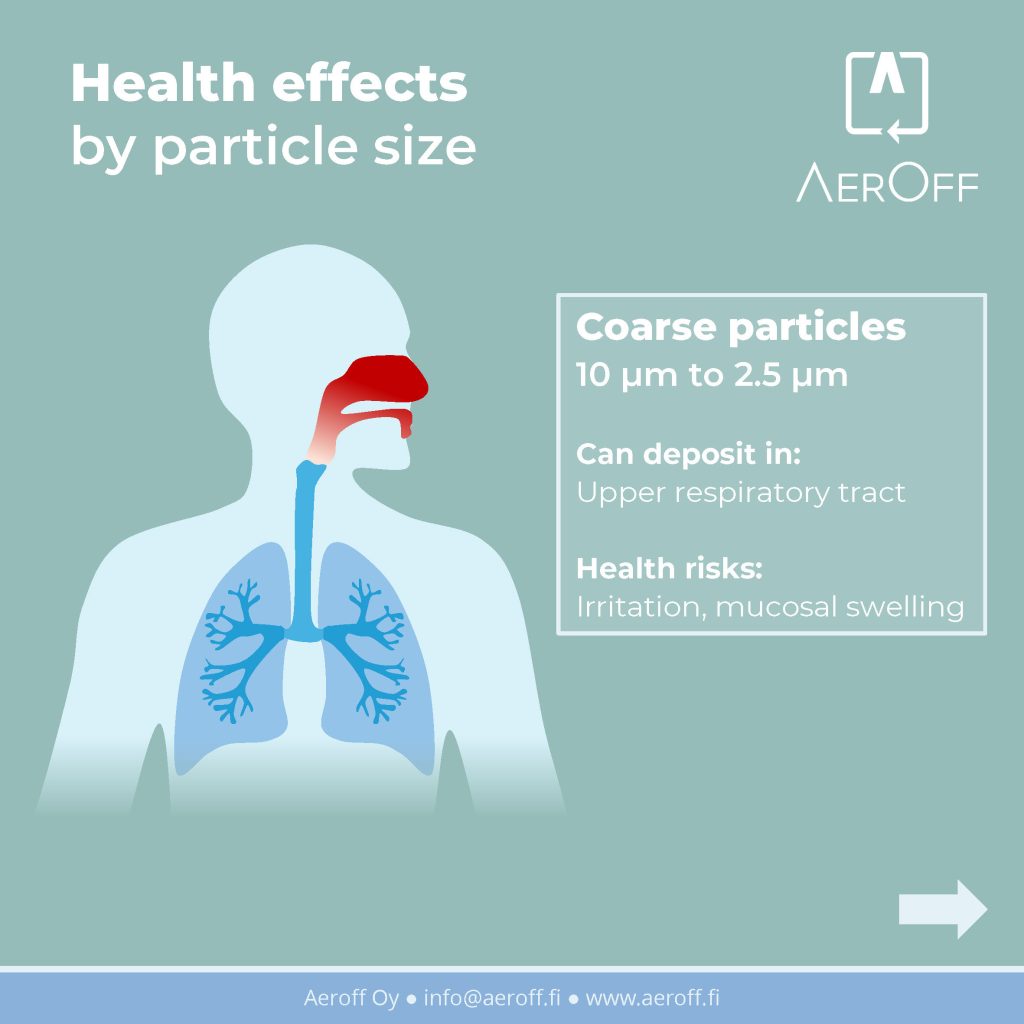
1️⃣ Coarse particles with a diameter of around 10 µm typically remain in the upper respiratory tract. The body tries to remove them through mechanisms such as coughing, sneezing, or mucosal swelling.
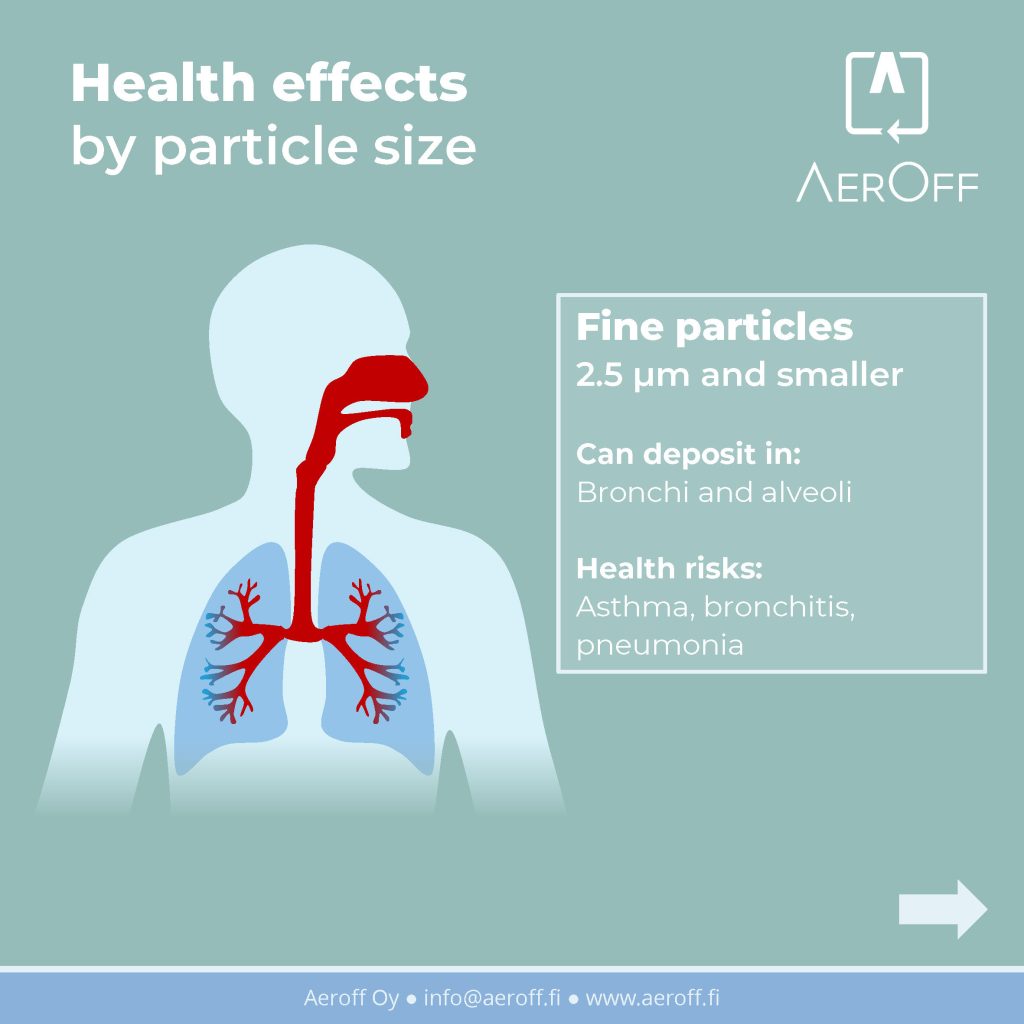
2️⃣ Particles smaller than 2.5 µm can reach the alveoli in the lungs and trigger inflammatory reactions in the bronchi. This may lead to conditions such as asthma, bronchitis, or pneumonia.
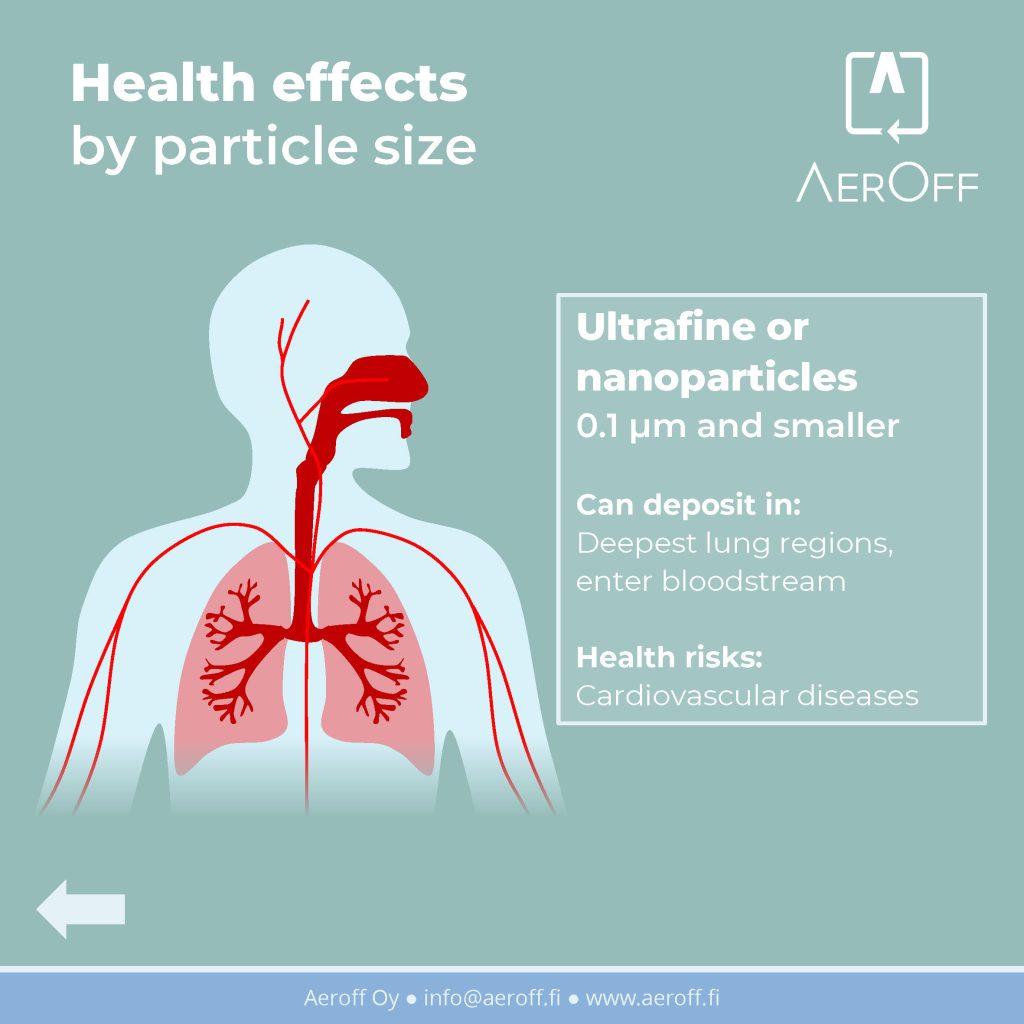
3️⃣ Ultrafine particles, with a diameter of less than 0.1 µm, can penetrate the deepest parts of the lungs and even enter the bloodstream. Such particles are associated with an increased risk of cardiovascular diseases, including heart attacks and strokes.
📧 Ask our experts for more information: info@aeroff.fi